

Log new Serviceform chatbot submissions in a Google Sheets spreadsheet
Every new Serviceform chatbot submission becomes a row in a Google Sheets spreadsheet you choose, giving you one running list of chatbot leads that your team can sort, filter and share.
 Serviceform
 Google Sheets
2 steps Setup ~5 min Used on 2.8k sites Free to import
What this workflow does
A chatbot on your website collects names, contact details and questions around the clock. Reviewing them inside Serviceform works, but sharing them with a colleague or tracking follow-ups is easier in a spreadsheet. This workflow builds that sheet for you, one row per submission.
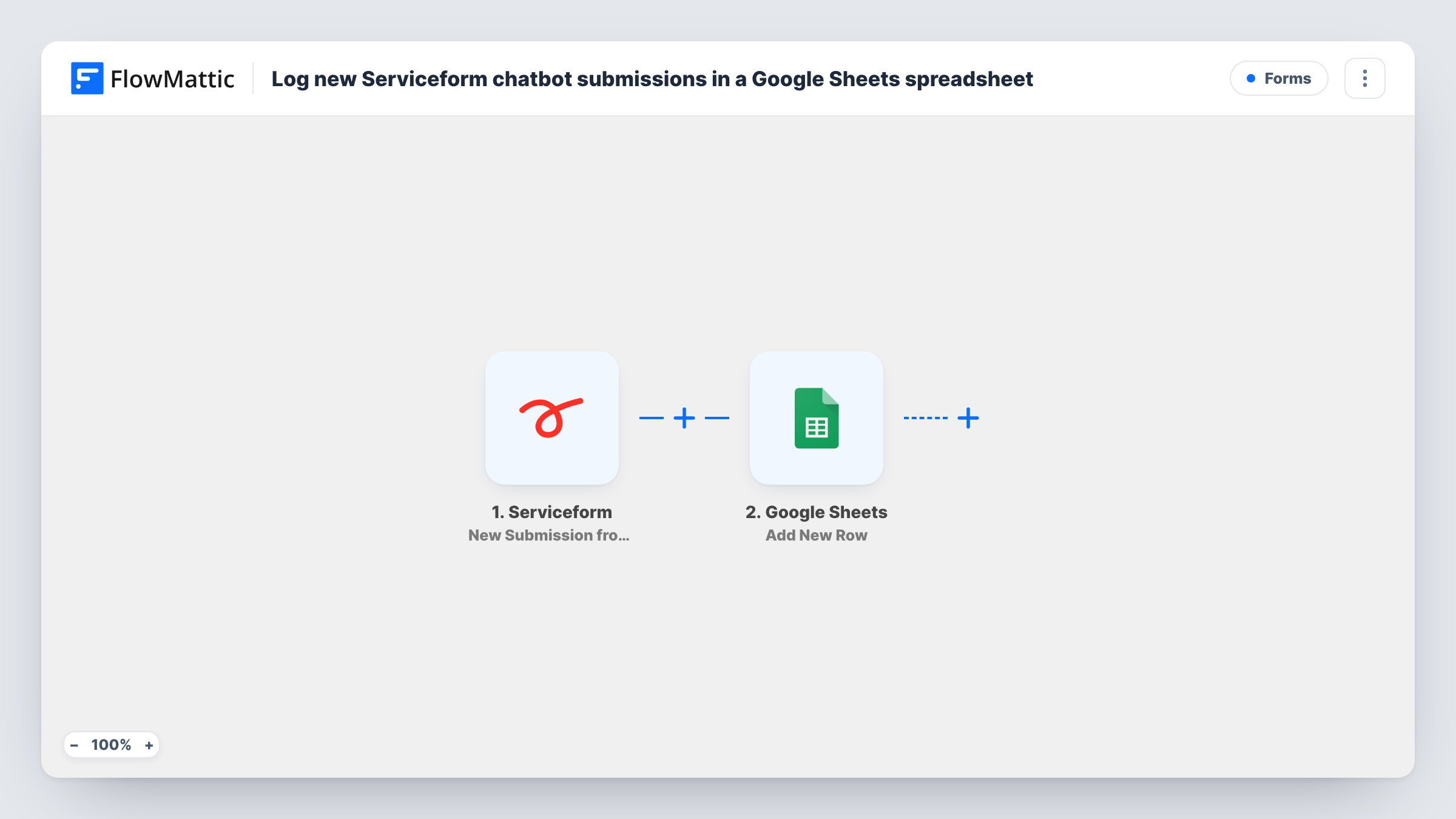
The Serviceform trigger fires for each new submission from your chatbot. FlowMattic passes the answers on, and the Google Sheets step adds a new row to the spreadsheet and sheet you pick, with each column filled from the submission field you map to it.
Because each run appends rather than overwrites, the sheet becomes a history of every chatbot conversation that ended in a submission. Add your own columns for status or owner and your team can work through the list. If a row looks wrong, open that run in Task History to see the values FlowMattic sent to the sheet.
Lead list for a home services company
A plumber's website chatbot asks for name, phone and the job. Each submission lands in a sheet the office checks when planning call-backs.
Shared view for an outside sales rep
A rep without a Serviceform login reads the chatbot leads in a shared Google Sheet and marks which ones they have called.
Monthly reporting on chatbot volume
With one row per submission, a pivot table in the sheet shows how many chatbot leads you received each month or by service type.
How this workflow runs
What happens at each step once the workflow is on, and what you need before you import it.
 Serviceform New Submission from Chatbot
Runs when your Serviceform chatbot receives a new submission. The answers collected in the chat are passed on so you can map them into the sheet.
- Google Sheets Add New Row
Adds a new row to the Google Sheets spreadsheet you select. Map each column to a field from the chatbot submission and connect your Google account on import.
What you need
- FlowMatticCore
- Serviceform AccountAccount
- Google Sheets AccountAccount
After importing, map your own data. To keep the template universal, not every step is pre-filled. Open each step in the builder and connect your accounts and fields (channels, lists, sheets, recipients) before you switch the workflow on.
Make it yours
Changes worth making after you import it.
- Add a timestamp column and map the submission time to it, if the trigger provides one, so you can sort leads by when they came in.
- Add a Filter after the trigger if one chatbot handles several topics and you only want some of them in this sheet.
- Run a test chat after import so FlowMattic captures the submission fields before you map the sheet's columns.
Questions about this workflow
Will past Serviceform chatbot submissions be added to the sheet?
No. The trigger fires on new submissions, so only chats submitted after you turn the workflow on create rows.
Does the Google Sheet need headers before I import?
Set up the header row first. The column mapping in the Google Sheets step is easier when each column already has a name that matches a chatbot field.
Does this change anything in Serviceform?
No. The workflow only reads new submissions and writes them to Google Sheets. Your chatbot and its settings stay as they are.
More Forms workflows
Other ready-to-import templates from the same category.







Import this workflow into your WordPress site
Download the JSON, import it from the Workflows screen and connect your accounts. Every run stays on your server, with no per-task fees.
30-day money-back guarantee Unlimited workflows and runs Self-hosted