

Log incoming Callyzer call data to a Google Sheets spreadsheet
Call data that Callyzer sends to FlowMattic through its webhook is written as a new row in Google Sheets, so you keep a call log in a spreadsheet your team can filter and share.
 Callyzer
 Google Sheets
2 steps Setup ~5 min Used on 3.2k sites Free to import
What this workflow does
Callyzer records your team's call activity, but reviewing it alongside other numbers often means exporting reports by hand. Keeping the same data in a Google Sheet lets you build your own views, share them with people outside Callyzer and keep a history that grows on its own. This workflow fills that sheet for you.
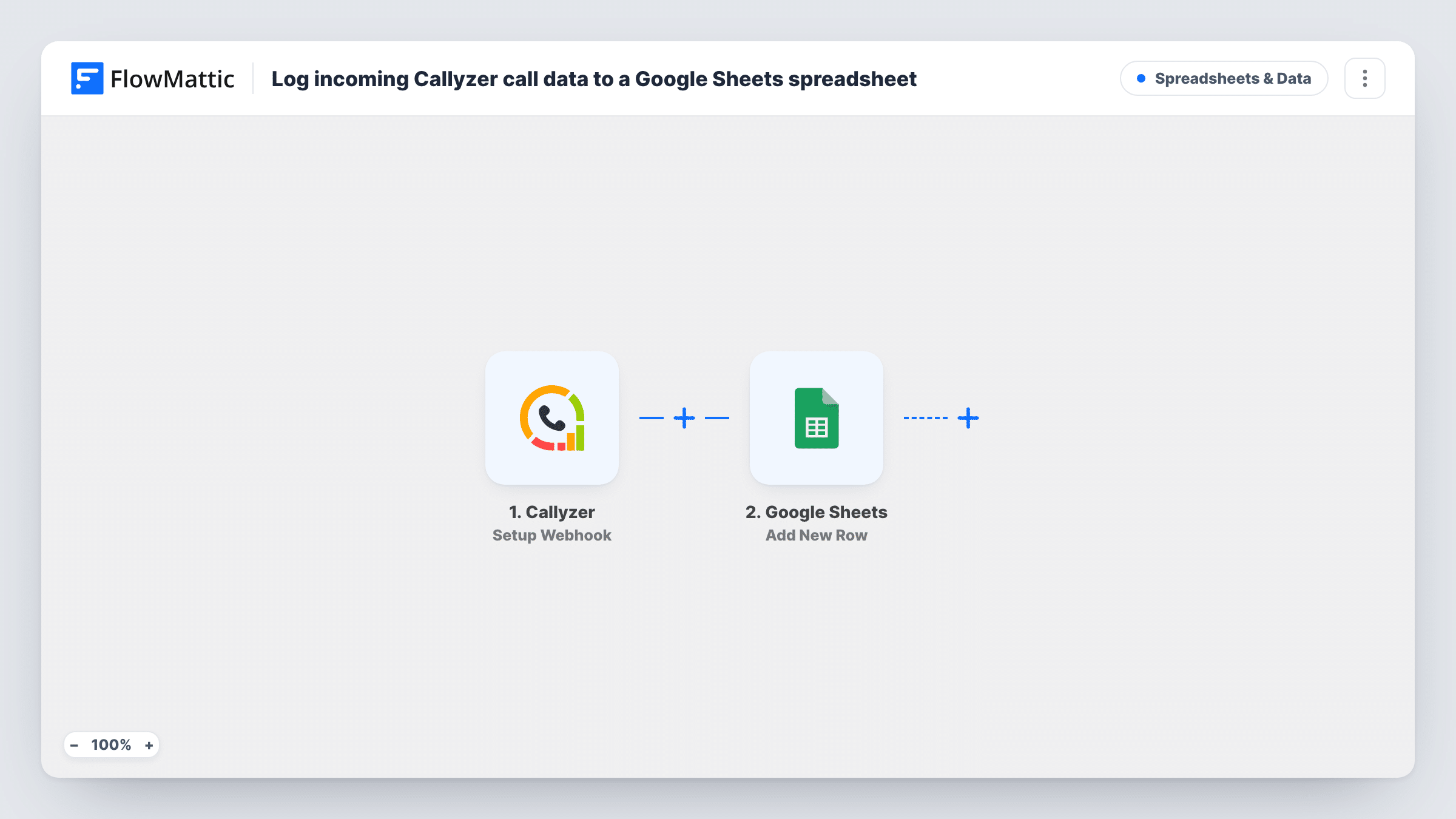
The Callyzer Setup Webhook trigger gives you a webhook that Callyzer calls when an event occurs on its side. Each time Callyzer sends call data to it, FlowMattic passes the payload to Google Sheets, where Add New Row appends one row to the spreadsheet you select. You choose which piece of call data goes into each column.
The workflow logs whatever Callyzer sends to the webhook; it does not pick out particular calls. Each delivery becomes one row, and existing rows are never changed. Task History records every run, which is useful while you check which call fields arrive from Callyzer.
Sales manager tracking team calls
Each call event Callyzer reports lands in a shared sheet, so you can sort by caller or date and see daily activity without opening Callyzer.
Weekly call reports with charts
With call data piling up in rows, a pivot table or chart in Google Sheets shows call counts per person or per week.
Matching calls against a lead list
Keep the Callyzer call log in the same Google Sheets file as your lead list, then use lookups to see which leads have been called.
How this workflow runs
What happens at each step once the workflow is on, and what you need before you import it.
 Callyzer Setup Webhook
Gives you a webhook for Callyzer and runs each time Callyzer sends an event to it. The call data in that event is passed on for mapping into the sheet.
- Google Sheets Add New Row
Appends one row to your chosen Google Sheets spreadsheet for every Callyzer event received. Connect your Google account, pick the sheet and map call details to the columns.
What you need
- FlowMatticCore
- Callyzer AccountAccount
- Google Sheets AccountAccount
After importing, map your own data. To keep the template universal, not every step is pre-filled. Open each step in the builder and connect your accounts and fields (channels, lists, sheets, recipients) before you switch the workflow on.
Make it yours
Changes worth making after you import it.
- Set up the webhook on the Callyzer side as the trigger step describes, then make or receive a test call so FlowMattic captures real call data before you map columns.
- If you only want some calls in the sheet, add a Filter after the trigger with a condition on a field Callyzer sends, such as the call type, once you have seen it in a test run.
- Keep this sheet just for the Callyzer log and build reports on a second tab, so formulas don't sit in the rows the workflow appends to.
Questions about this workflow
Which Callyzer calls end up in the Google Sheet?
Every event Callyzer sends to the webhook becomes a row. The template has no Filter, so add one if you want to narrow it by a field in the call data.
What call details can I put in the columns?
Whatever Callyzer includes in its webhook data. Run a test call after import and check the trigger's captured response in FlowMattic to see the available fields.
Does the workflow change Callyzer records?
No. It only receives data from Callyzer and writes rows to Google Sheets. Nothing is sent back to Callyzer.
More Spreadsheets & Data workflows
Other ready-to-import templates from the same category.



Import this workflow into your WordPress site
Download the JSON, import it from the Workflows screen and connect your accounts. Every run stays on your server, with no per-task fees.
30-day money-back guarantee Unlimited workflows and runs Self-hosted