

Log new Servis.ai webhook events to a Google Sheets spreadsheet
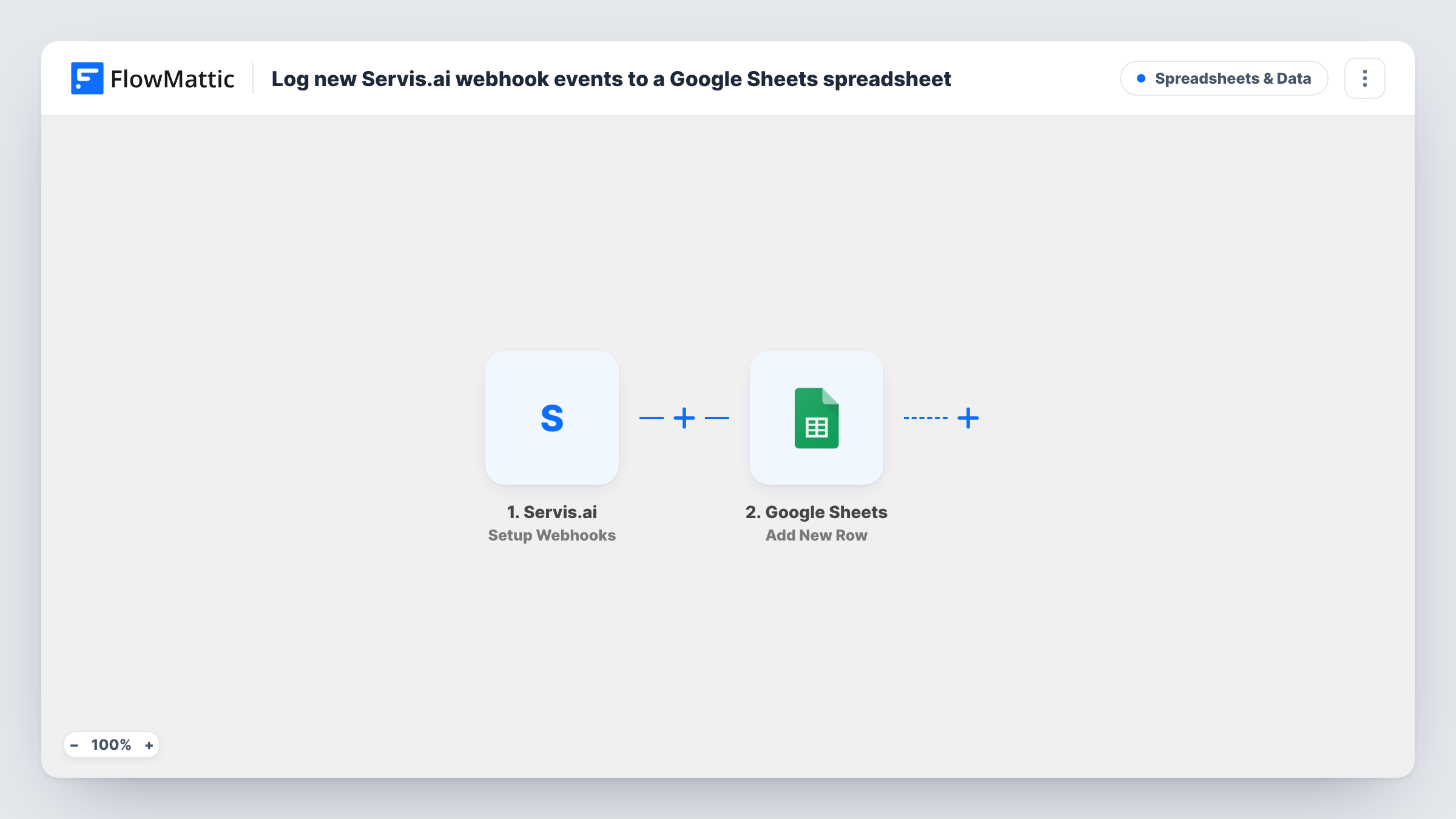
Each time the Servis.ai event you set up fires, this workflow adds a row to Google Sheets with the event data, giving you a running spreadsheet log of activity from your Servis.ai account.
 Servis.ai
 Google Sheets
2 steps Setup ~5 min Used on 3.1k sites Free to import
What this workflow does
Servis.ai holds your deals and contacts, but a spreadsheet is often where people sort, share and report on that activity. Copying records across by hand leaves gaps whenever someone forgets. This workflow writes each event to Google Sheets as it happens, so the log keeps growing on its own.
The Servis.ai trigger is Setup Webhooks. It fires on the events you set up inside Servis.ai, so you decide which activity the log records. Whatever data Servis.ai sends with each event is captured for mapping.
The second step uses Add New Row in Google Sheets. You pick the spreadsheet and sheet, then map event fields to columns. Each event adds one new row; earlier rows are never changed, so the sheet reads as a history rather than a current list. Task History keeps a run-by-run record of what was written.
Deal activity log for weekly reporting
Set the trigger to the deal events you care about. The sheet collects each one, ready for a pivot table or chart in your weekly sales review.
Sharing CRM activity with people outside Servis.ai
A manager or partner who has no Servis.ai login reads the Google Sheet to follow new activity on the accounts they care about.
A backup trail of events
Keep a running record of Servis.ai events in a spreadsheet you own, useful when you need to check what happened and when.
How this workflow runs
What happens at each step once the workflow is on, and what you need before you import it.
 Servis.ai Setup Webhooks
Fires on the events you set up inside Servis.ai. Each event starts one run, and the data Servis.ai sends with it becomes available to map into the sheet.
- Google Sheets Add New Row
Adds a new row to the Google Sheets spreadsheet you choose for every Servis.ai event. Connect your Google account, pick the sheet and map the event fields to its columns.
What you need
- FlowMatticCore
- Servis.ai AccountAccount
- Google Sheets AccountAccount
After importing, map your own data. To keep the template universal, not every step is pre-filled. Open each step in the builder and connect your accounts and fields (channels, lists, sheets, recipients) before you switch the workflow on.
Make it yours
Changes worth making after you import it.
- Trigger one event in Servis.ai right after import so FlowMattic captures real data. You can then set up column headers that match the fields you want to keep.
- If the Servis.ai data includes a date or time, map it into its own column so you can sort and filter the log by date in Google Sheets.
- If you set up several event types, add a Router with a Google Sheets step per event type, each condition matching one type, so each kind of event fills its own tab.
Questions about this workflow
Which Servis.ai events end up in Google Sheets?
The ones you set up in the Setup Webhooks trigger. Every event of those kinds adds a row, so choose only the activity you want logged.
Does the sheet update an existing row when a Servis.ai deal changes?
No. Add New Row always appends a fresh row, so a deal that changes three times appears three times. That gives you a history rather than one row per deal.
Do I need to prepare the Google Sheet before mapping Servis.ai fields?
Add a header row with the column names you want first. The Google Sheets step then lets you map an event field to each of those columns.
Will past Servis.ai activity be added to the sheet?
No. Only events that fire after the workflow is turned on are logged.
More Spreadsheets & Data workflows
Other ready-to-import templates from the same category.





Import this workflow into your WordPress site
Download the JSON, import it from the Workflows screen and connect your accounts. Every run stays on your server, with no per-task fees.
30-day money-back guarantee Unlimited workflows and runs Self-hosted