

When a new form submission received in QuestionScout, add a new row in Google Spreadsheet
Every response submitted to a QuestionScout form is written to a new row in Google Sheets, so you can sort, share and chart answers in a spreadsheet your whole team can open.
 QuestionScout
 Google Sheets
2 steps Setup ~5 min Used on 3.5k sites Free to import
What this workflow does
QuestionScout keeps responses inside its own dashboard. When colleagues without a QuestionScout login need the answers, or you want to build charts and pivot tables, a spreadsheet is easier to work with. This workflow adds each new response to Google Sheets as it comes in.
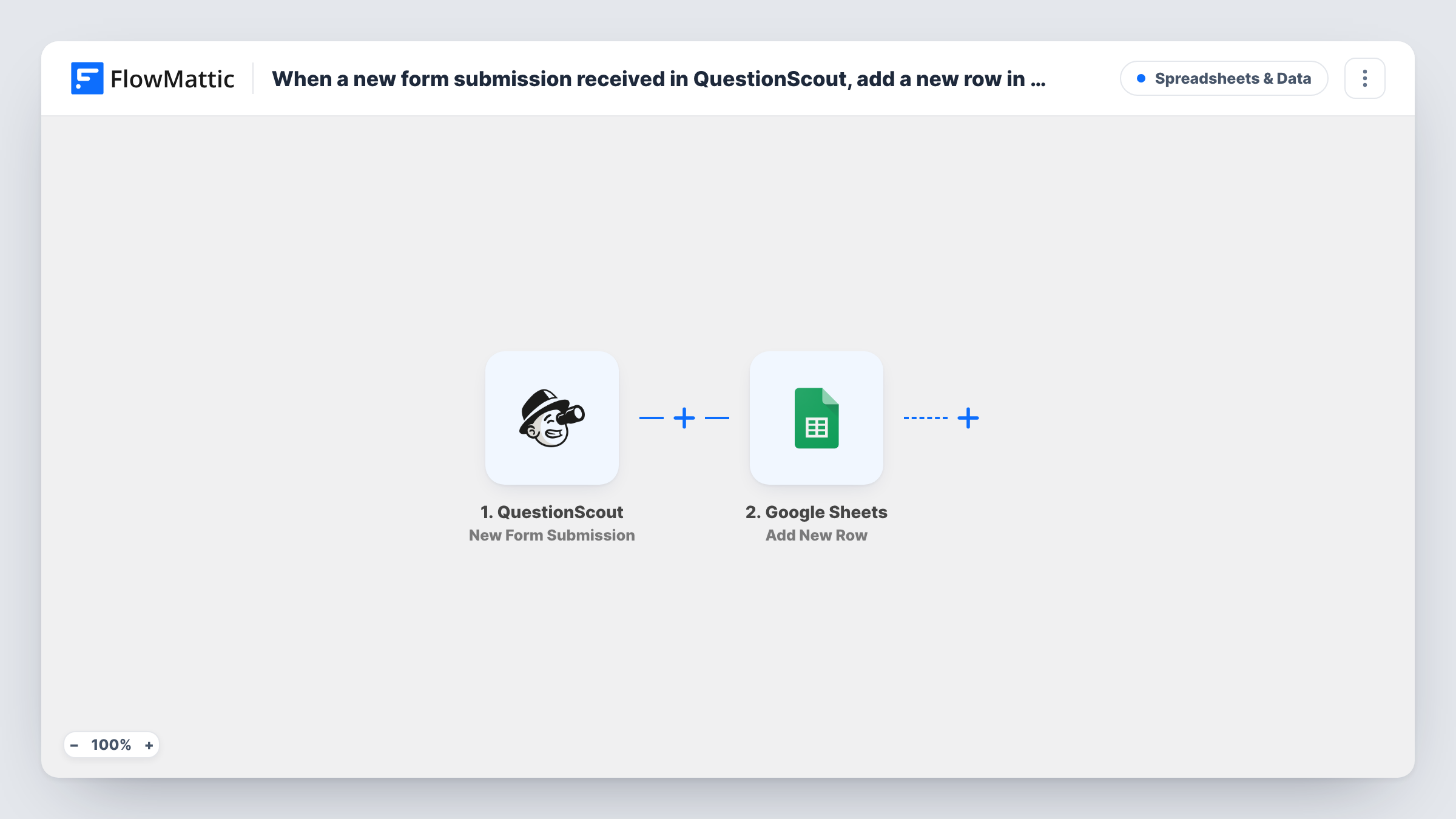
The QuestionScout trigger starts a run for each response a respondent submits. FlowMattic takes the answers from that submission and hands them to Google Sheets. The Add New Row action places them in a fresh row, with each answer going to the column you map it to.
Responses stay in QuestionScout as well. The sheet is a copy, so editing a row doesn't change the original answer. Only submissions received after you switch the workflow on are added, and every one of them gets a row, test entries included. You can review every response's run in Task History.
Customer feedback survey
A QuestionScout survey after each support case collects ratings. The support lead charts scores by week in Google Sheets without exporting files.
Event registration form
Attendees sign up through QuestionScout, and the organiser shares the sheet with venue staff who need the guest list but no form account.
Job application intake
Applicants answer screening questions in QuestionScout. The hiring team adds notes and a status column beside each row in the sheet.
How this workflow runs
What happens at each step once the workflow is on, and what you need before you import it.
 QuestionScout New Form Submission
Fires when a new submission arrives on your QuestionScout form. The respondent's answers become values you can place into spreadsheet columns.
- Google Sheets Add New Row
Places the submission in a new row of the Google Sheets spreadsheet linked to this step. Set up a header row first, then map each column to one QuestionScout answer.
What you need
- FlowMatticCore
- QuestionScout AccountAccount
- Google Sheets AccountAccount
After importing, map your own data. To keep the template universal, not every step is pre-filled. Open each step in the builder and connect your accounts and fields (channels, lists, sheets, recipients) before you switch the workflow on.
Make it yours
Changes worth making after you import it.
- Add a column for the submission date and map it from the trigger data, if your test run shows one, so you can filter the sheet by period.
- Add a Filter after the trigger if only some answers belong in the sheet, for example continuing only when a rating question is below a value you choose.
- Keep the sheet's header names close to the question labels. Mapping is quicker after a test submission, and colleagues can read the sheet without the form open.
Questions about this workflow
Do QuestionScout responses still appear in the QuestionScout dashboard?
Yes. The workflow only copies each submission to Google Sheets. Nothing is removed or changed in QuestionScout.
What happens if I add a new question to the QuestionScout form?
Its answer isn't in the sheet until you add a column and map the new value in the Add New Row step. Submit a test after changing the form so the new field shows up for mapping.
Are old QuestionScout submissions copied to the sheet?
No. Only responses received after you turn the workflow on create rows. Export older ones from QuestionScout if you need them in the same sheet.
Can several QuestionScout forms feed one Google Sheet?
Yes. If the trigger is tied to a single form, make a copy of the workflow for each form and point every copy's Add New Row step at the same spreadsheet. A column naming the form keeps the rows apart.
More Spreadsheets & Data workflows
Other ready-to-import templates from the same category.




Import this workflow into your WordPress site
Download the JSON, import it from the Workflows screen and connect your accounts. Every run stays on your server, with no per-task fees.
30-day money-back guarantee Unlimited workflows and runs Self-hosted