

When a new lead is created in Pagemaker, add a new row in Google Sheets
Each lead captured by a Pagemaker landing page form becomes a new row in Google Sheets, giving you a shared list of leads that anyone with access to the sheet can sort and follow up from.
 Pagemaker
 Google Sheets
2 steps Setup ~5 min Used on 2.2k sites Free to import
What this workflow does
Landing pages collect leads, but the follow-up often happens elsewhere: a sales rep's call list, a shared sheet, a report for a client. This workflow copies each Pagemaker lead into Google Sheets as it comes in, so the list is always current without exports.
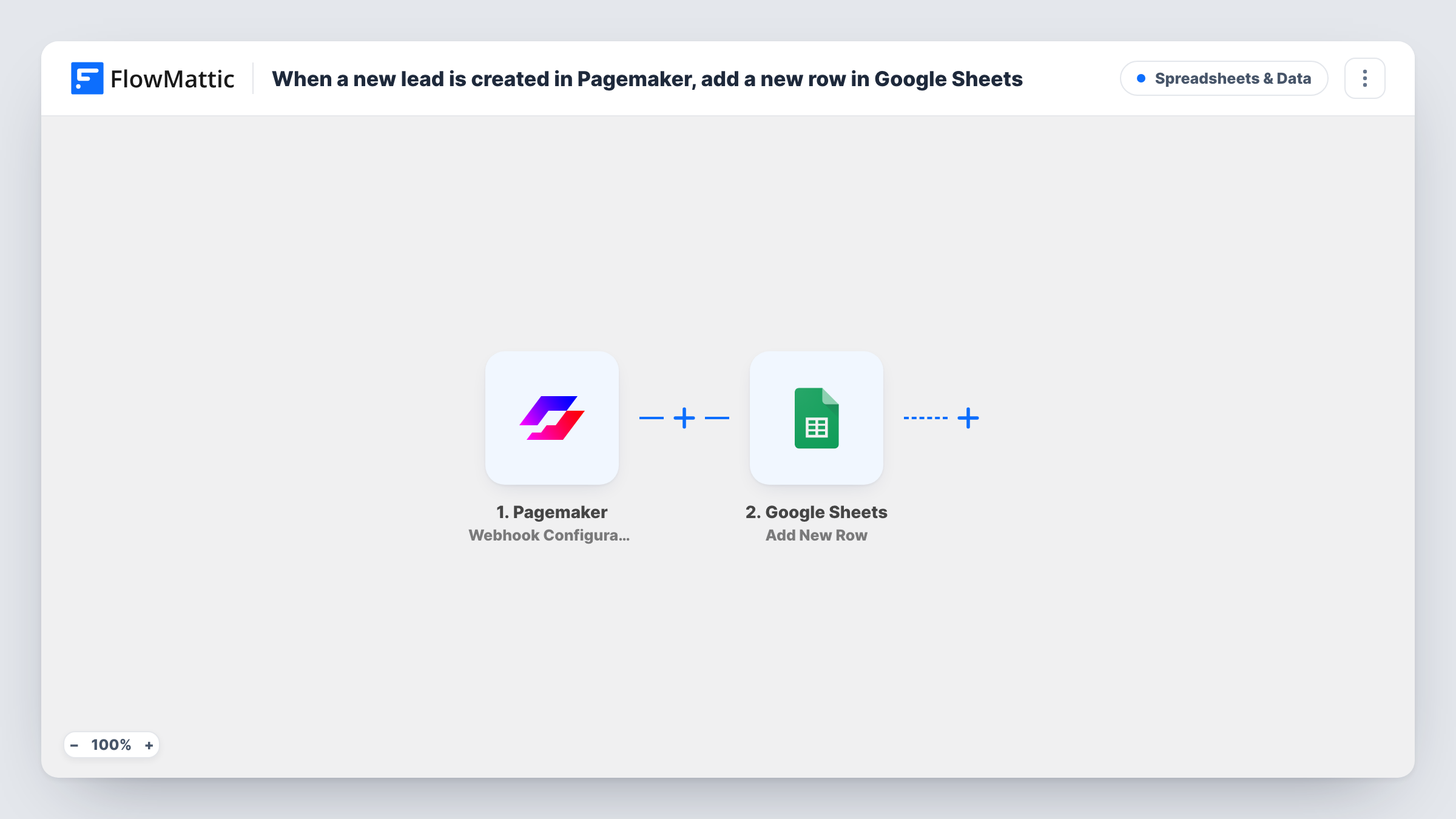
The Pagemaker trigger is Webhook Configuration, which fires when a lead is created from a landing page form. FlowMattic receives the lead's details and passes them to the Google Sheets step. That step adds a new row to the spreadsheet you choose, with each column mapped to a value from the lead.
Every lead adds one row, including repeat sign-ups from the same person, because the step adds rows and does not check for duplicates. Task History keeps a record of each run, so you can match a row back to the lead data FlowMattic received.
Agency reporting for a client campaign
Leads from a client's Pagemaker landing page fill a sheet the client can open at any time, so you don't send lead exports by hand.
Call list for an inside sales team
Reps work down the sheet of Pagemaker leads, adding their own notes and outcomes in extra columns next to each row.
Comparing landing pages
With leads from several Pagemaker pages in one sheet, you can count sign-ups per page if the lead data includes which page it came from.
How this workflow runs
What happens at each step once the workflow is on, and what you need before you import it.
 Pagemaker Webhook Configuration
Runs each time someone becomes a lead through one of your Pagemaker landing page forms. The lead's details are passed on so you can place them in the sheet.
- Google Sheets Add New Row
Appends a row for the new lead to the Google Sheets spreadsheet you choose. Map each lead value to a column and connect your Google account during import.
What you need
- FlowMatticCore
- Pagemaker AccountAccount
- Google Sheets AccountAccount
After importing, map your own data. To keep the template universal, not every step is pre-filled. Open each step in the builder and connect your accounts and fields (channels, lists, sheets, recipients) before you switch the workflow on.
Make it yours
Changes worth making after you import it.
- Set up column headers in the sheet before you map, and leave spare columns on the right for notes your team adds by hand.
- Submit a test lead through your Pagemaker form after import so FlowMattic receives sample data, then map the values in the Google Sheets step.
- Add a Filter after the trigger if you only want some leads in this sheet, for example continue only when a value your team relies on is not empty.
Questions about this workflow
What starts the Pagemaker trigger?
A lead created from a Pagemaker landing page form. Each new lead starts one run and adds one row.
Does a returning Pagemaker lead update their old row?
No. The Google Sheets step only adds rows, so a person who signs up twice appears twice in the sheet.
Which Pagemaker lead details reach the sheet?
The ones you map to columns. A test lead after import shows what the trigger delivers, and you choose which values to keep.
More Spreadsheets & Data workflows
Other ready-to-import templates from the same category.




Import this workflow into your WordPress site
Download the JSON, import it from the Workflows screen and connect your accounts. Every run stays on your server, with no per-task fees.
30-day money-back guarantee Unlimited workflows and runs Self-hosted