

Log every new easybill document to a Google Sheets spreadsheet
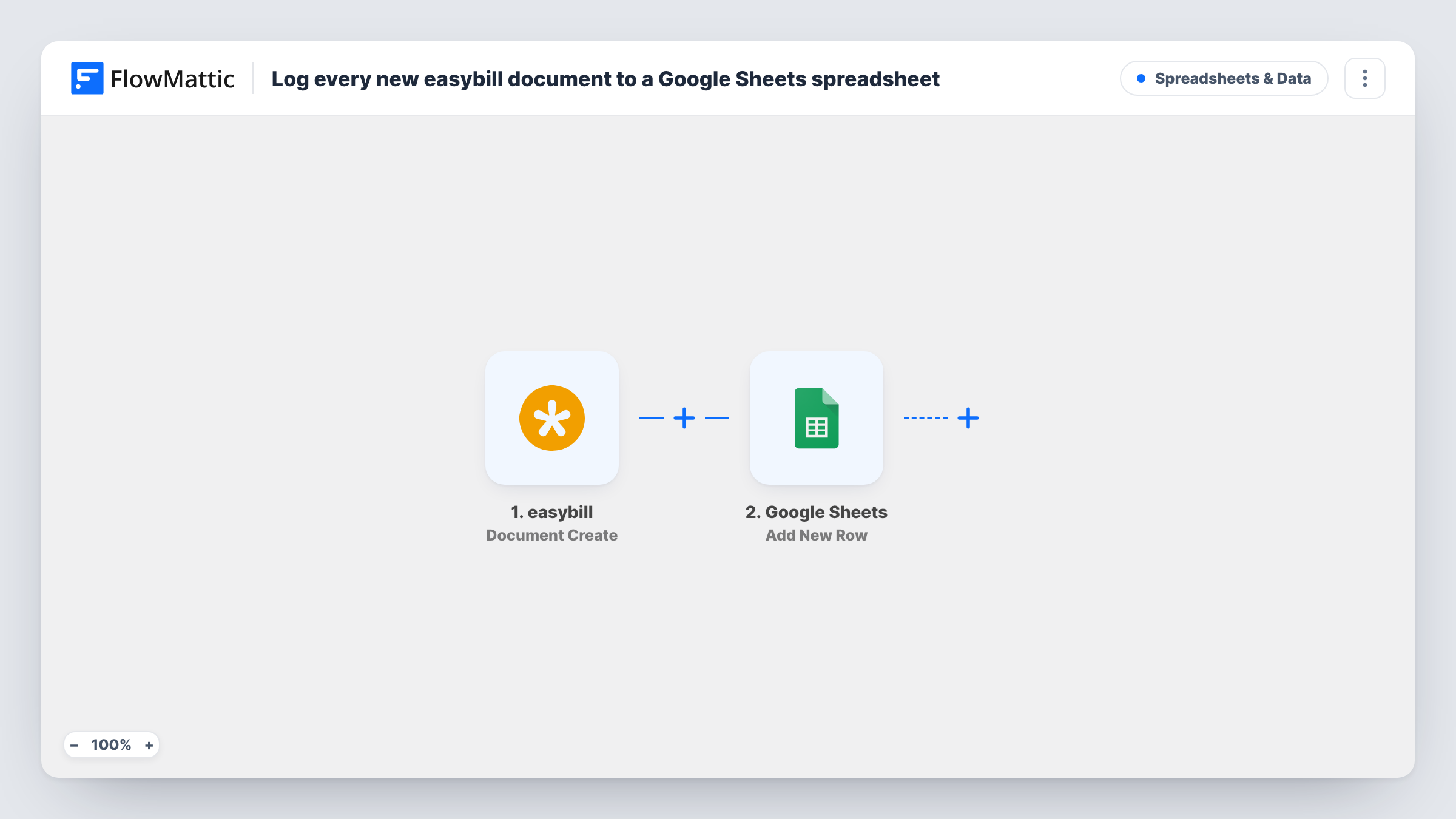
Each document created in easybill is added as a new row in a Google Sheets spreadsheet, giving you a running list of your invoices and other easybill documents that you can sort, total and share.
 easybill
 Google Sheets
2 steps Setup ~5 min Used on 1.5k sites Free to import
What this workflow does
easybill holds your billing documents, but not everyone who needs to see them has an easybill login, and a spreadsheet is often easier for quick totals or a monthly check. Exporting by hand means the sheet is always a little out of date. This workflow adds each document to the sheet when it is created.
The easybill Document Create trigger fires when a document is created in your account and passes its data on. FlowMattic then adds a new row in Google Sheets, with the easybill values you map to each column, for example the document number, customer, date and total if they appear in the trigger data.
The row records the document as it was at the moment of creation. Later edits, payments or deletions in easybill do not change the sheet, because this template only listens for new documents. Task History shows each run and the data that was written.
Monthly figures for your accountant
Your accountant opens a shared sheet listing every document created in easybill that month, without needing access to your billing account.
Sales team view of issued invoices
Account managers check the sheet to see which customers were billed this week, using filters on the customer and date columns.
Quick revenue tally
Add a SUM formula under the total column, and the sheet gives you a running figure as each new easybill document is logged.
How this workflow runs
What happens at each step once the workflow is on, and what you need before you import it.
 easybill Document Create
Runs when a document is created in your easybill account. The document's data is passed on for mapping into the spreadsheet row.
- Google Sheets Add New Row
Writes one row per new easybill document to the Google Sheets spreadsheet you pick. Map document fields such as number, customer and amount to the matching columns.
What you need
- FlowMatticCore
- easybill AccountAccount
- Google Sheets AccountAccount
After importing, map your own data. To keep the template universal, not every step is pre-filled. Open each step in the builder and connect your accounts and fields (channels, lists, sheets, recipients) before you switch the workflow on.
Make it yours
Changes worth making after you import it.
- Create one test document in easybill after import, then look at the captured fields to see which ones hold the number, customer and amount before mapping.
- Add a Filter after the trigger if you only want certain document types in the sheet, using the field in the easybill data that names the type.
- Build a second workflow on easybill's Document Payment Add trigger to log payments on another sheet tab, so you can match payments to documents.
Questions about this workflow
Are easybill documents I created before importing added to the sheet?
No. The Document Create trigger fires for documents created after the workflow is on. Export older ones from easybill if you want them in the sheet.
Does the Google Sheets row change when I edit the easybill document?
No. This workflow only adds a row when a document is created. easybill has a separate Document Update trigger in FlowMattic if you want to track changes in another workflow.
Which easybill document types are included?
The trigger fires when a document is created, so every type you create in easybill starts a run. Use a Filter on the type field to narrow it down.
More Spreadsheets & Data workflows
Other ready-to-import templates from the same category.



Import this workflow into your WordPress site
Download the JSON, import it from the Workflows screen and connect your accounts. Every run stays on your server, with no per-task fees.
30-day money-back guarantee Unlimited workflows and runs Self-hosted