

When form submission is received in Groove Pages, create a new user in WordPress
Each Groove Pages form submission creates a WordPress user on your site from the details the visitor entered, so people who sign up on a Groove funnel page get an account without you adding them by hand.
 Groove Pages
 WordPress
2 steps Setup ~5 min Used on 514 sites Free to import
What this workflow does
Groove Pages is good at collecting sign-ups, but the people who fill in your funnel form still need an account on your WordPress site if you run a members area, course or client portal there. Creating each account yourself is slow and easy to forget. This workflow makes the account from the form.
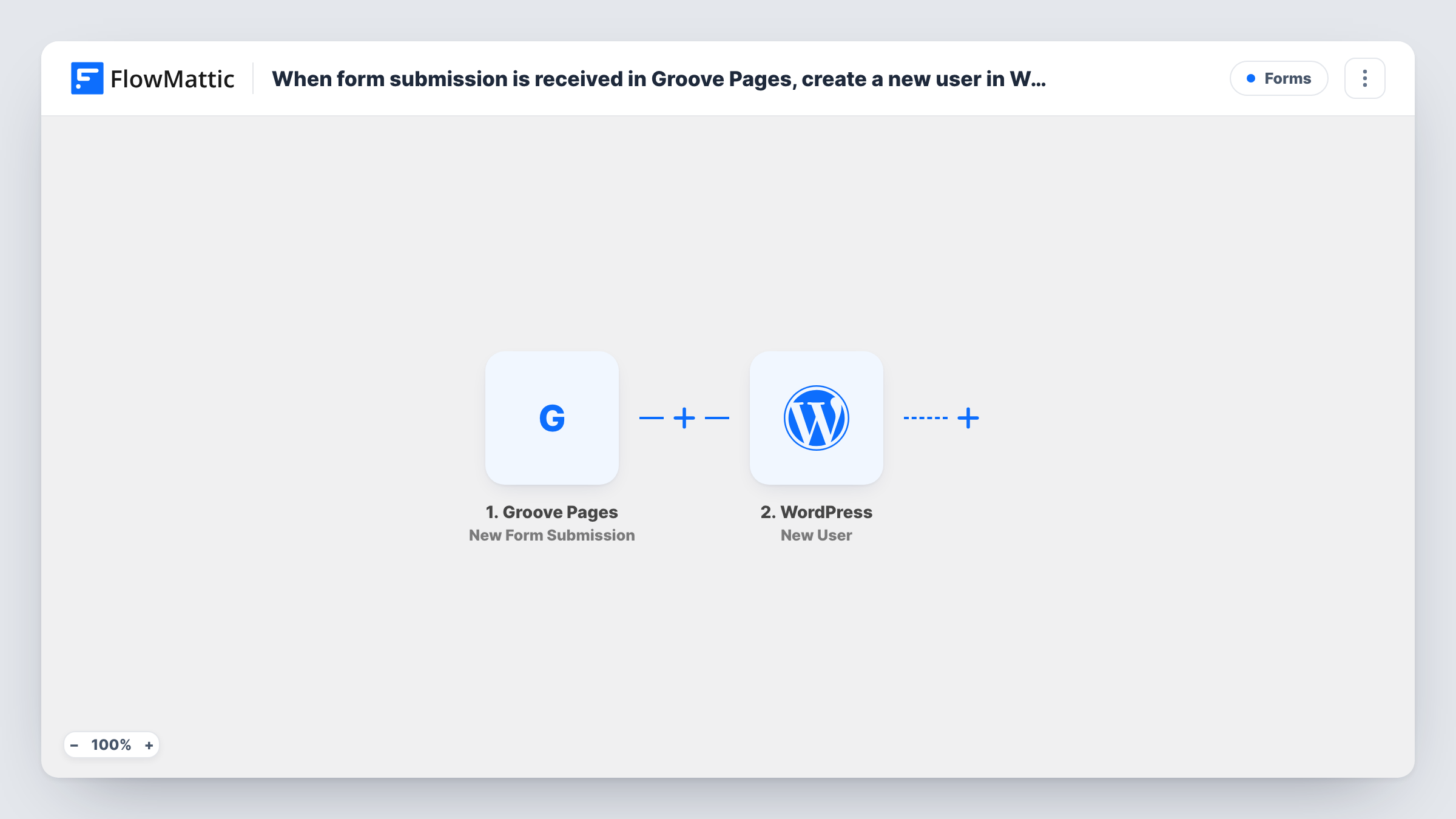
The Groove Pages trigger runs when a form on your Groove page is submitted, and its fields become data you can map. FlowMattic then runs the WordPress New User action on the site where FlowMattic is installed. You map the visitor's email and name fields into it, and WordPress creates the user.
Every submission runs both steps, because the template has no Filter. A returning visitor doesn't get a duplicate: for an email that's already registered, the step returns the existing user's ID, which appears in Task History. WordPress may still refuse a username that a different account already uses. Do a test submission and look at the new user in WordPress to check the role and details it was given before you share the form widely.
Free course sign-ups from a Groove funnel
Your opt-in page on Groove Pages offers a free mini course hosted in WordPress. Each sign-up gets a WordPress account they can log in with to reach the lessons.
Client portal registration
A consultant's Groove landing page has an onboarding form. Submitting it creates the client's WordPress user so you can give them portal access straight away.
Community or forum access
Visitors who join through a Groove form become WordPress users, ready for the forum or community plugin running on your site.
How this workflow runs
What happens at each step once the workflow is on, and what you need before you import it.
 Groove Pages New Form Submission
Runs when a visitor submits a form on your Groove Pages page. The form's fields, such as name and email, are passed on so you can map them into the new account.
- WordPress New User
Adds a WordPress user account for the person who filled in the Groove form. Map the submitted email and name fields into the step, then use a test run to confirm the account is set up the way you expect.
What you need
- FlowMatticCore
- Groove Pages AccountAccount
After importing, map your own data. To keep the template universal, not every step is pre-filled. Open each step in the builder and connect your accounts and fields (channels, lists, sheets, recipients) before you switch the workflow on.
Make it yours
Changes worth making after you import it.
- Make the email field required on the Groove Pages form. Without an address WordPress can't create the account, and that run ends with an error in Task History.
- If the same form also takes questions from people who shouldn't get accounts, add a checkbox and a Filter between the Groove Pages trigger and the WordPress step that continues only when it's ticked.
- Add an email step after New User to send the person a welcome message with your login page link, so they know an account now exists for them.
Questions about this workflow
What happens when someone submits the Groove Pages form twice?
WordPress won't create a second user for an email already in use; the New User step returns that user's ID instead. If you set a role in the step, the existing account gets it added. A username taken by a different account may be refused, and Task History shows the reply.
Does the visitor get a WordPress login email?
The template doesn't send one itself. Check a test sign-up to see what your site does on its own, and add an email step after New User if you want to send login details.
Which role do Groove Pages sign-ups get in WordPress?
Check the user created by your first test submission. If the role isn't the one you want, adjust the New User step before turning the workflow on, since every submission creates an account.
Do I need Groove Pages on the same server as WordPress?
No. Groove Pages sends each submission to FlowMattic, and FlowMattic creates the user on the WordPress site where it's installed.
More Forms workflows
Other ready-to-import templates from the same category.







Import this workflow into your WordPress site
Download the JSON, import it from the Workflows screen and connect your accounts. Every run stays on your server, with no per-task fees.
30-day money-back guarantee Unlimited workflows and runs Self-hosted