

Create a HubSpot CRM contact from a new Caspio record
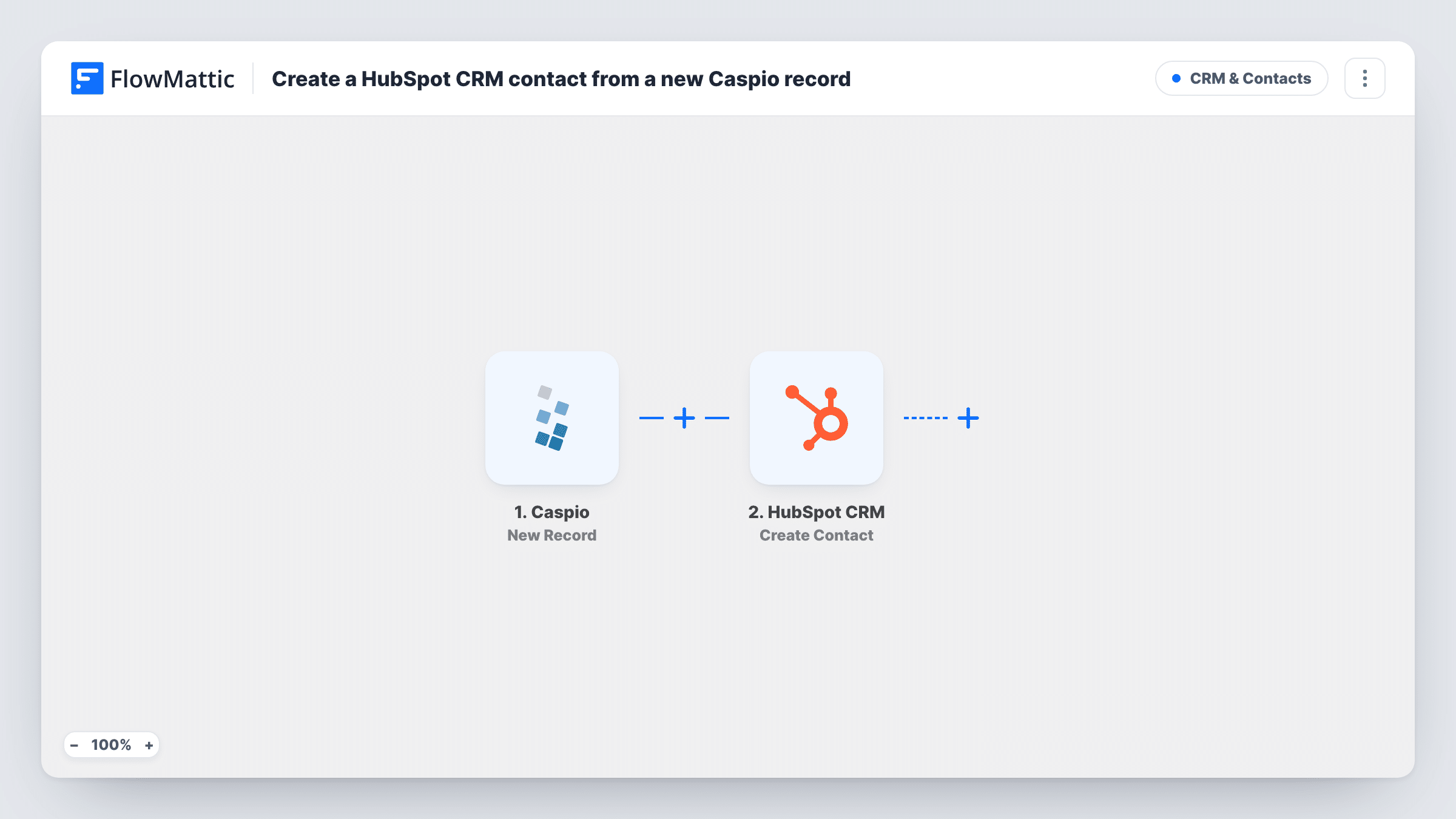
When a new record is added to the Caspio table you choose, this workflow creates a contact in HubSpot CRM from the record’s details, so people captured in your Caspio app reach your sales team.
 Caspio
 HubSpot CRM
2 steps Setup ~5 min Used on 3.3k sites Free to import
What this workflow does
Caspio is often where custom apps collect people: registrations, applications, member sign-ups. Your sales and marketing team, meanwhile, works in HubSpot. Exporting the table and importing it into the CRM every week leaves a gap where new people wait. This workflow closes it by creating the contact as the record arrives.
The Caspio trigger is New Record, which fires when a new record is added to the chosen table. The record's columns become data you can map. The HubSpot CRM step then creates a contact, and you map the Caspio columns to the HubSpot contact properties, starting with the email address.
This HubSpot action makes new contacts and never searches for an existing one first, so a Caspio record whose email is already in your CRM may be refused. You can read HubSpot's reply to every Caspio record in Task History. Edits to a Caspio record after it was added don't start the workflow.
Event registrations built in Caspio
An events team runs its registration app on Caspio. Each new registrant becomes a HubSpot contact the team can email about the next session.
Partner or reseller applications
Applications stored in a Caspio table reach HubSpot as contacts, where the partnerships manager tracks the follow-up conversation.
Member directory sign-ups
A membership organisation keeps its directory in Caspio and creates a HubSpot contact for every new member so marketing can include them.
How this workflow runs
What happens at each step once the workflow is on, and what you need before you import it.
 Caspio New Record
Starts a run whenever your selected Caspio table gains a record. Every column of that record is passed on for mapping into the HubSpot contact.
- HubSpot CRM Create Contact
Creates a contact in HubSpot CRM from the Caspio record. Map the email column and any name, phone or company columns you keep to the matching contact properties, and connect HubSpot on import.
What you need
- FlowMatticCore
- Caspio AccountAccount
- HubSpot CRM AccountAccount
After importing, map your own data. To keep the template universal, not every step is pre-filled. Open each step in the builder and connect your accounts and fields (channels, lists, sheets, recipients) before you switch the workflow on.
Make it yours
Changes worth making after you import it.
- Add a record to the Caspio table after import so FlowMattic captures its columns, then map them to HubSpot properties and check the new contact in the CRM.
- If some records have no email address, add a Filter after the trigger that continues only when the email column is not empty.
- Watching more than one Caspio table? Duplicate the workflow and point each copy's trigger at a different table, keeping one mapping per table.
Questions about this workflow
What happens if the Caspio record's email already exists in HubSpot?
The step uses Create Contact, which does not update existing contacts. If the address is taken, HubSpot may turn the request down, and that Caspio record's run in Task History holds the reply.
Do changes to a Caspio record update the HubSpot contact?
No. The trigger fires on new records only, and the step only creates contacts. Later edits in Caspio are not sent to HubSpot.
Which Caspio columns can become HubSpot contact properties?
Any column in the record can be mapped. Run a test with a new record after import to see the column values FlowMattic receives.
Are existing Caspio records sent to HubSpot?
No. Only records added after the workflow is on create contacts. Import older records into HubSpot separately if you need them.
More CRM & Contacts workflows
Other ready-to-import templates from the same category.





Import this workflow into your WordPress site
Download the JSON, import it from the Workflows screen and connect your accounts. Every run stays on your server, with no per-task fees.
30-day money-back guarantee Unlimited workflows and runs Self-hosted