

Log new BoldDesk tickets in a Google Sheets spreadsheet for reporting
Every ticket created in BoldDesk is copied into a new Google Sheets row, building a ticket log you can chart, pivot and share for support reporting outside your help desk.
 BoldDesk
 Google Sheets
2 steps Setup ~5 min Used on 1.7k sites Free to import
What this workflow does
Help desk reports answer the questions their designers thought of. When you want your own view, such as tickets per product, per weekday or per customer, a spreadsheet is often the quickest place to build it. Getting the data there usually means regular exports. This workflow writes each new ticket to a sheet as it is created, so the data is already waiting when you sit down to report.
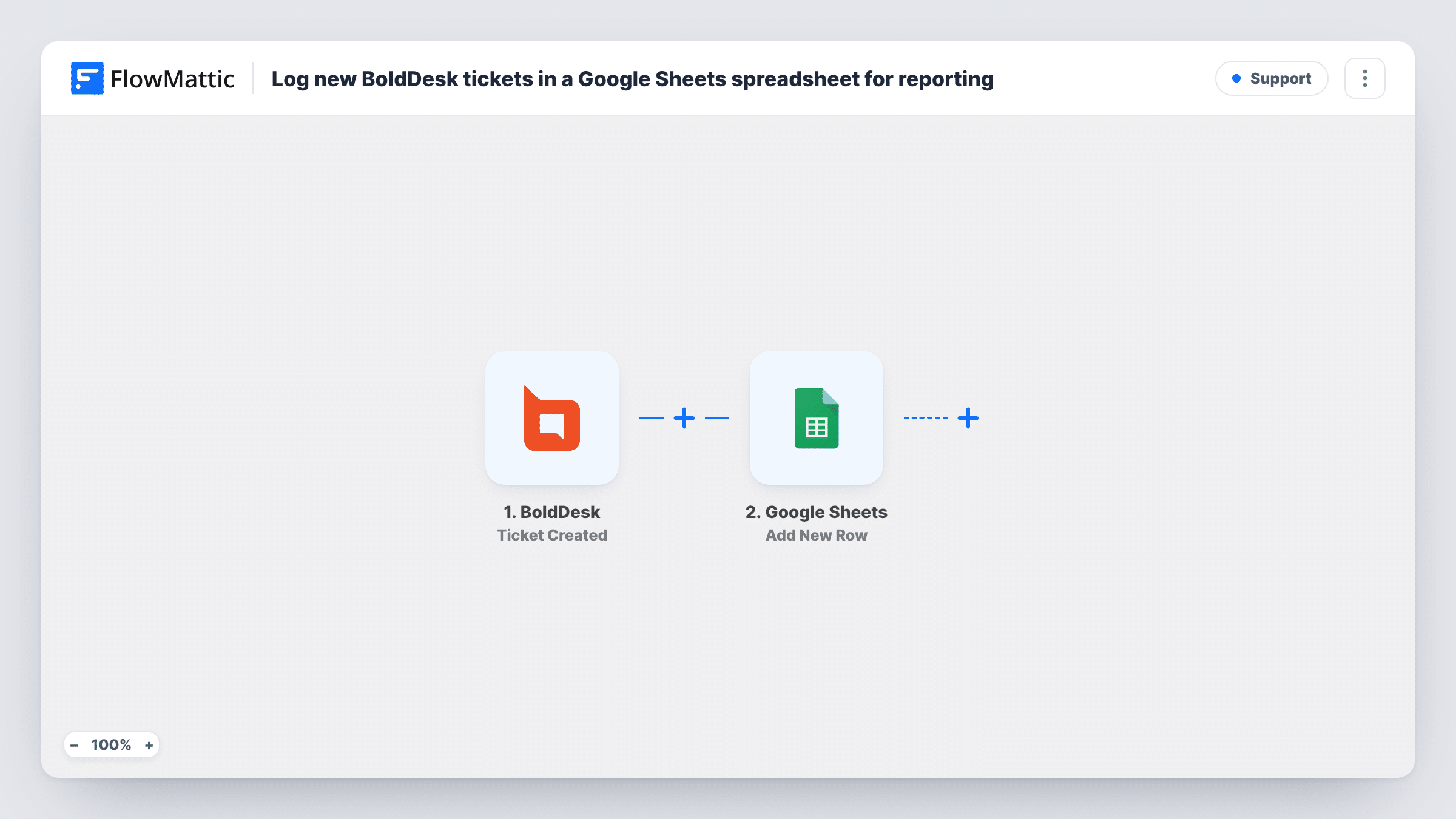
Each run starts the moment a new ticket appears in BoldDesk. FlowMattic passes the ticket data to Google Sheets, where the Add New Row action writes it to the spreadsheet and tab you choose. You decide which ticket values become columns when you map the step.
The row records the ticket as it was at creation. Later replies, status changes and property edits are separate BoldDesk events, so they do not update the sheet. Each run is listed in Task History with the data sent to Google Sheets.
Weekly ticket volume for a support lead
A pivot table on the log counts new BoldDesk tickets per week, giving the support lead a volume chart that refreshes as rows arrive.
Spotting which product generates tickets
Map a product or category value from each ticket to its own column, then group the rows to see where new requests come from.
Sharing numbers with people outside support
Managers or clients without a BoldDesk seat read the sheet to see how many tickets came in, without access to the conversations.
How this workflow runs
What happens at each step once the workflow is on, and what you need before you import it.
 BoldDesk Ticket Created
Fires when a ticket is created in BoldDesk. The new ticket's details are passed to the Google Sheets step, ready to map to columns.
- Google Sheets Add New Row
Writes one row per new ticket to the Google Sheets spreadsheet and tab you select. Connect your Google account and map each ticket value to the column header you set up for it.
What you need
- FlowMatticCore
- BoldDesk AccountAccount
- Google Sheets AccountAccount
After importing, map your own data. To keep the template universal, not every step is pre-filled. Open each step in the builder and connect your accounts and fields (channels, lists, sheets, recipients) before you switch the workflow on.
Make it yours
Changes worth making after you import it.
- Create a test ticket in BoldDesk after import so FlowMattic captures the ticket fields, then map them to your columns before you turn the workflow on.
- Add a column that holds the ticket's created date from BoldDesk, so pivot tables and charts can group tickets by day, week or month.
- To track closures too, build a second workflow on BoldDesk's Ticket Property Updated trigger, add a Filter that continues only for the closed status, and send those rows to another tab.
Questions about this workflow
Does the Google Sheets row change when the BoldDesk ticket is updated?
No. The trigger fires once, when the ticket is created, and the step only adds rows. Status changes and replies are separate BoldDesk events that this template does not listen for.
Are tickets created before I turn on the workflow logged?
No. Only tickets created after the workflow is active start a run. Export older tickets from BoldDesk if you need them in the sheet.
Can I log only some BoldDesk tickets?
Yes. Add a Filter between the trigger and Google Sheets that continues only when a ticket value, such as its brand or category, matches what you want to keep.
Will customer details from the ticket appear in the sheet?
Only if you map them. Keep personal details out of shared sheets unless everyone with access should see them.
More Support workflows
Other ready-to-import templates from the same category.






Import this workflow into your WordPress site
Download the JSON, import it from the Workflows screen and connect your accounts. Every run stays on your server, with no per-task fees.
30-day money-back guarantee Unlimited workflows and runs Self-hosted