

When Elementor Pro form is submitted, upload the file to Google Drive
When a visitor submits an Elementor Pro form with a file upload, this workflow sends the uploaded file to a Google Drive folder you choose, so attachments land in Drive instead of staying only on your server.
 Elementor
 Google Drive
2 steps Setup ~5 min Used on 957 sites Free to import
What this workflow does
Forms that accept files, such as CVs, briefs, photos or signed documents, save each upload on your WordPress site. Getting those files to the people who need them usually means downloading and re-uploading them by hand. This workflow puts each uploaded file in Google Drive for you.
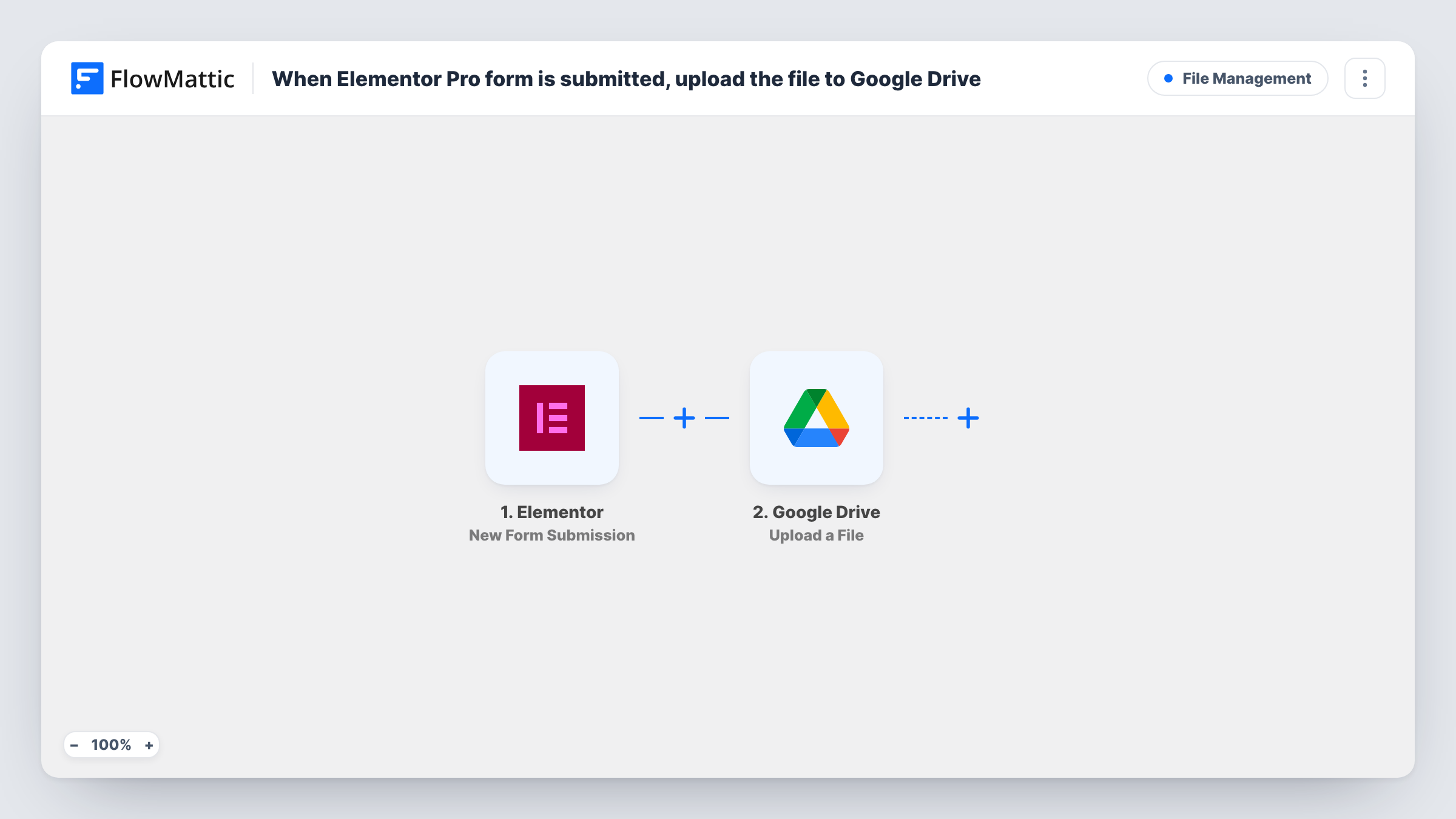
The Elementor trigger starts a run whenever someone sends one of your Elementor Pro forms. FlowMattic passes the submission, including the file upload field, to Google Drive. The Upload a File action places the file in the Drive folder you select.
Your form needs a file upload field for this to be useful, and you map that field into the Google Drive step. Each submission is handled once, so a form with an upload produces one run. Task History shows every run, along with the value sent from the file field, which helps when you test the mapping.
Job applications with CVs
Candidates attach a CV to your Elementor careers form, and each file appears in the hiring folder your recruiters already share in Drive.
Client briefs for a design studio
Clients upload a brief or logo with their project request, and the file goes into a Drive folder the design team works from.
Proof-of-purchase uploads
Customers send a receipt photo through a warranty or rebate form, and the image is stored in a Drive folder for whoever checks claims.
How this workflow runs
What happens at each step once the workflow is on, and what you need before you import it.
 Elementor New Form Submission
Starts the workflow each time an Elementor Pro form is sent from your site. The form fields, including any file upload field, are passed to the Google Drive step.
- Google Drive Upload a File
Puts the submitted file into a Drive folder of your choice. Map the form's file upload field as the file, pick the folder and connect your Google account on import.
What you need
- FlowMatticCore
- Elementor PluginPlugin
- Google Drive AccountAccount
After importing, map your own data. To keep the template universal, not every step is pre-filled. Open each step in the builder and connect your accounts and fields (channels, lists, sheets, recipients) before you switch the workflow on.
Make it yours
Changes worth making after you import it.
- Add a Filter after the trigger that continues only when the file upload field is not empty, so submissions without an attachment don't produce a failed upload.
- Map the sender's name or the submission date into the file name, if the step lets you set one, so files in Drive are easy to match to their submissions.
- Submit the form once with a small test file after import, then check the Drive folder and Task History to confirm the file arrived.
Questions about this workflow
Can I use this with the free version of Elementor for file uploads?
No. Elementor's form widget is part of Elementor Pro, so you need Elementor Pro on the same WordPress site as FlowMattic.
What if the Elementor form has no file attached?
The workflow still runs, and the Google Drive step has no file to upload. Task History shows the result. Add a Filter on the upload field to skip those submissions.
Is the file removed from my WordPress site after the Drive upload?
No. The workflow only copies the file to Google Drive. Elementor keeps its own copy as it normally does.
Can files from different Elementor forms go to different Drive folders?
Use a Router with one route per form, each with a condition on a field that names the form and its own Google Drive step. Run a test first to see which field identifies the form.
More File Management workflows
Other ready-to-import templates from the same category.








Import this workflow into your WordPress site
Download the JSON, import it from the Workflows screen and connect your accounts. Every run stays on your server, with no per-task fees.
30-day money-back guarantee Unlimited workflows and runs Self-hosted