

When new form submitted in Kadence Forms, create a new user in WordPress
When someone submits a Kadence Forms form on your site, this workflow creates a WordPress user account from the details they entered, so sign-up, membership or application forms can register people without manual work.
 Kadence Forms
 WordPress
2 steps Setup ~5 min Used on 2.2k sites Free to import
What this workflow does
Kadence lets you add forms to any page, but a form entry alone doesn't give anyone an account on your site. If you register people by hand from each submission, accounts wait until someone gets to them. This workflow creates the user from the form as it is submitted.
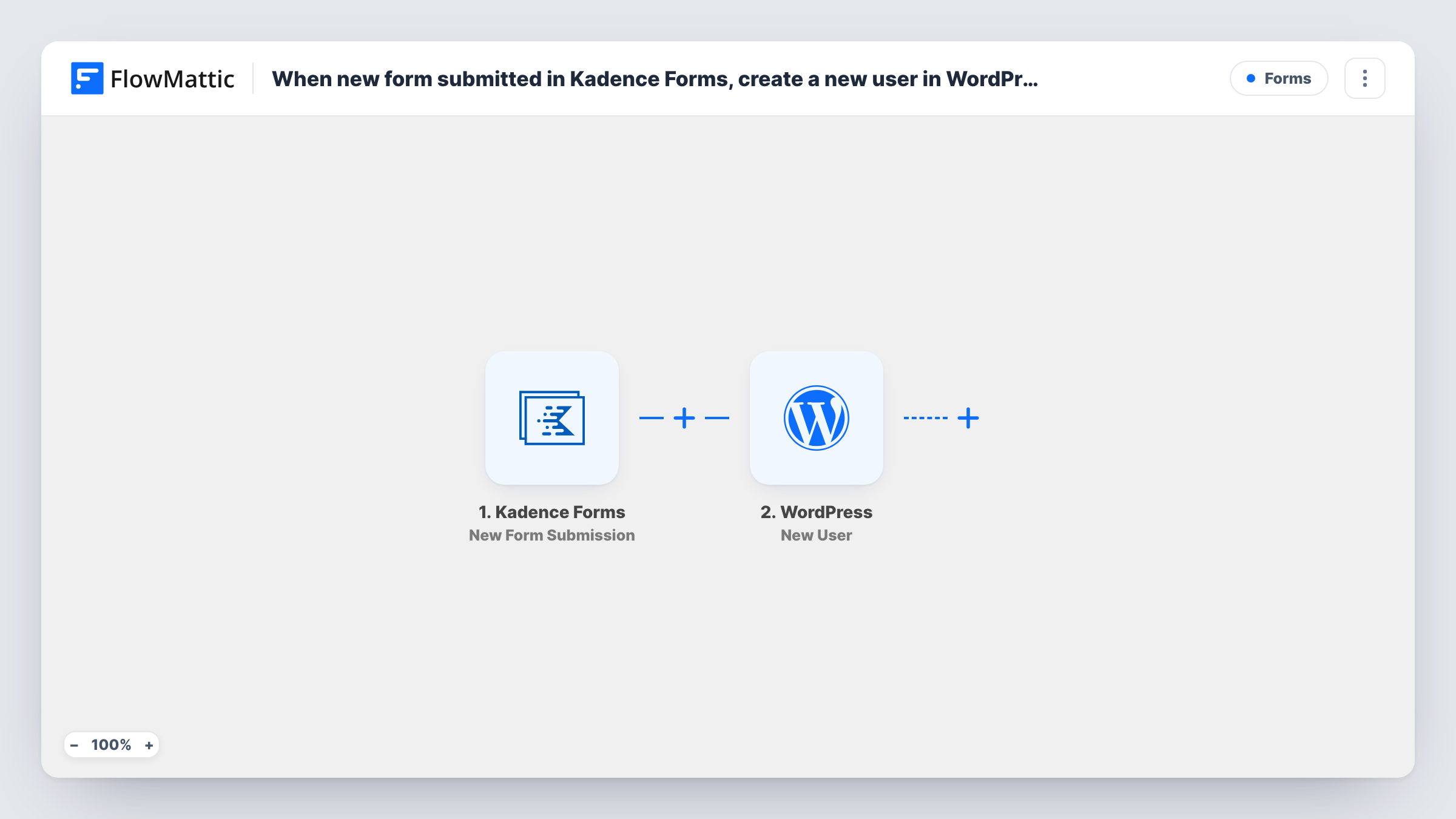
The Kadence Forms trigger runs when a visitor submits a Kadence form on your WordPress site. The WordPress step, New User, then creates a user on the same site from the form fields you map, such as the email address and a username.
Every submission starts a run. If the email or username already belongs to an account, WordPress won't create a second one, and Task History shows the response on the New User step. Check what the step offers after import, for example how the password and role are set, and run a test submission before you put the form live.
Member sign-up on a community site
A Kadence form on the join page collects name and email, and each new member gets a WordPress account they can log in with.
Client portal registration
Clients fill in a short form, and an account is created for them so they can reach the pages your portal shows to logged-in users.
Volunteer applications
Volunteers apply through a Kadence form, and each applicant gets a user account that an admin can later review or upgrade.
How this workflow runs
What happens at each step once the workflow is on, and what you need before you import it.
 Kadence Forms New Form Submission
Runs when a visitor submits a Kadence Forms form on your WordPress site. All the submitted fields are passed on to map into the new user.
- WordPress New User
Creates a WordPress user on your site from the form fields you map, such as the email address and username. Check the step's settings after import and test with a fresh email address.
What you need
- FlowMatticCore
- Kadence Forms PluginPlugin
After importing, map your own data. To keep the template universal, not every step is pre-filled. Open each step in the builder and connect your accounts and fields (channels, lists, sheets, recipients) before you switch the workflow on.
Make it yours
Changes worth making after you import it.
- Make the email field required in your Kadence form, so every submission gives the New User step an address to register.
- Add a Filter after the trigger that continues only when a consent or terms checkbox is ticked, so accounts are made only for people who agreed.
- Add WordPress's Send Password Reset action after New User, so each new member receives a link to set their own password.
Questions about this workflow
What if someone submits the Kadence form twice with the same email?
WordPress doesn't allow two accounts with one email address, so the second attempt doesn't create a user. Look in Task History to see the reply WordPress gave.
What WordPress role does a Kadence Forms sign-up receive?
That depends on how the New User step is set up after import. Check its settings and run a test, then look at the new account in Users to confirm the role.
Does Kadence Forms still email me each entry?
Yes. The workflow only listens for submissions and leaves the form's own actions, such as email notifications, as you set them in Kadence.
Can I create users only from one Kadence form?
Pick the form in the trigger if it offers a form choice, or add a Filter on a field that only that form sends. Check the trigger settings after import.
More Forms workflows
Other ready-to-import templates from the same category.







Import this workflow into your WordPress site
Download the JSON, import it from the Workflows screen and connect your accounts. Every run stays on your server, with no per-task fees.
30-day money-back guarantee Unlimited workflows and runs Self-hosted