

When new ticket is created in Freshdesk, add ticket details to Google Spreadsheet
Every new Freshdesk ticket is copied into a new Google Sheets row with the ticket details you map, giving you a running list of support requests that anyone with the sheet can read.
 Freshdesk
 Google Sheets
2 steps Setup ~5 min Used on 1.3k sites Free to import
What this workflow does
Freshdesk is where agents work tickets, but not everyone who cares about support has a seat there. Product managers, finance or a client may just want a list of what came in. This workflow keeps that list in Google Sheets by adding a row for each new ticket.
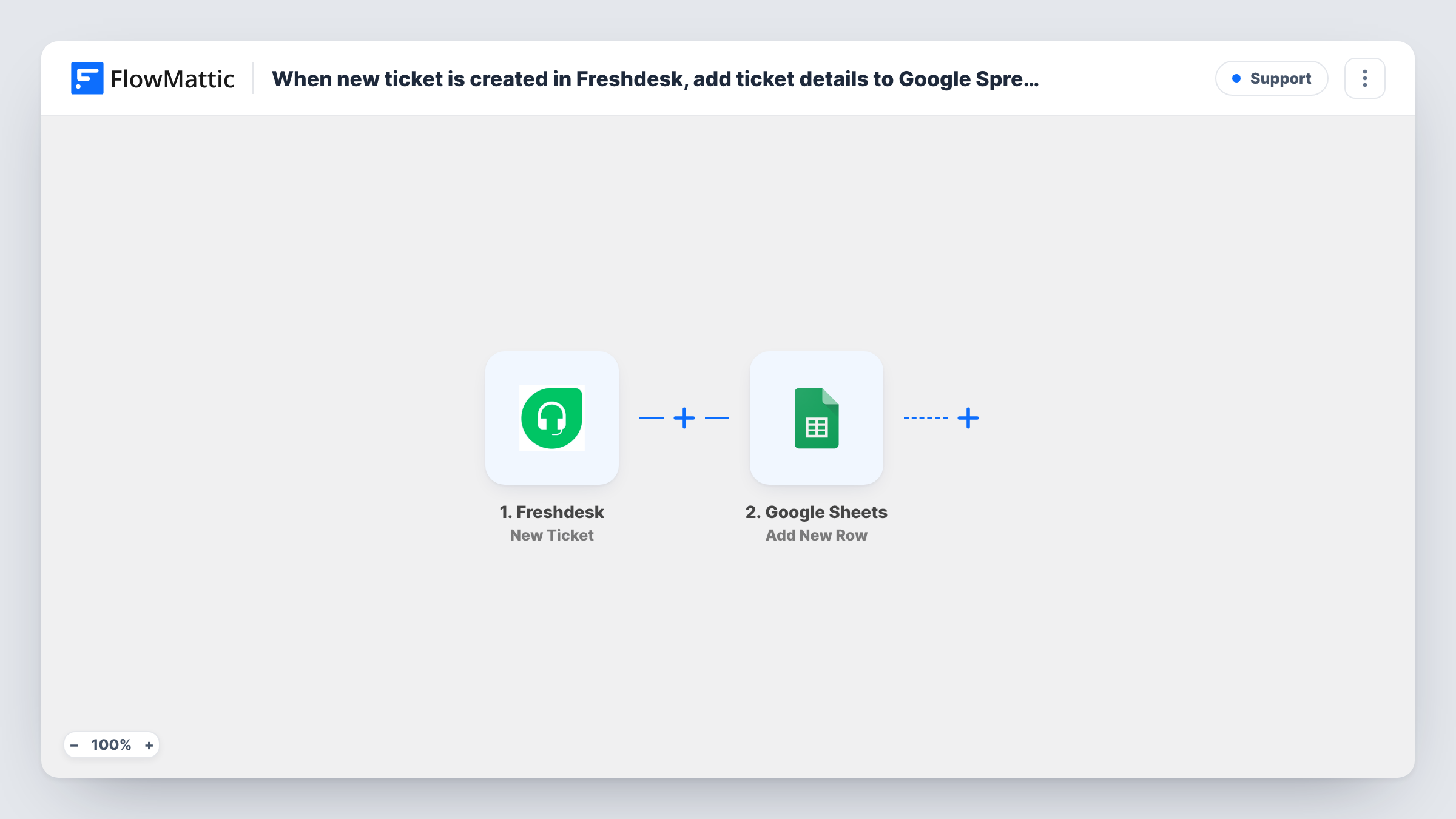
The Freshdesk trigger fires when a ticket is created in your helpdesk and hands the ticket data to FlowMattic. The next step runs Add New Row in Google Sheets. You choose which ticket details go into which columns, such as the ticket ID, subject and requester.
The row is written once, when the ticket is created. Later changes in Freshdesk, like a new status or a reply, do not update the sheet. Every new ticket is logged, because the template has no conditions. Task History lists each run with the data sent to Google, so you can check a ticket that did not appear in the sheet.
Weekly support volume report
A manager builds a pivot table on the sheet to count new Freshdesk tickets per week, without exporting reports from the helpdesk.
Sharing tickets with a client
An agency handles support for a client's product in Freshdesk and shares a read-only sheet so the client sees each request as it arrives.
Feature request backlog for product
Product managers scan the sheet for recurring subjects and pull ideas into their roadmap, without needing their own Freshdesk login.
How this workflow runs
What happens at each step once the workflow is on, and what you need before you import it.
 Freshdesk New Ticket
Fires when a new ticket is created in your Freshdesk helpdesk. The ticket's data is passed on for mapping into the spreadsheet.
- Google Sheets Add New Row
Adds one row to the Google Sheets spreadsheet you choose for each new ticket. Connect your Google account and map Freshdesk ticket data to your columns.
What you need
- FlowMatticCore
- Freshdesk AccountAccount
- Google Sheets AccountAccount
After importing, map your own data. To keep the template universal, not every step is pre-filled. Open each step in the builder and connect your accounts and fields (channels, lists, sheets, recipients) before you switch the workflow on.
Make it yours
Changes worth making after you import it.
- Put the Freshdesk ticket ID in its own column. It gives you a reliable key if you later look tickets up or match rows to other data.
- Add a Filter after the trigger if you only want some tickets logged, for example tickets with a high priority. Check the trigger's test data for the value Freshdesk uses.
- Create a second workflow on a Freshdesk ticket update trigger if you also want status changes recorded, and send those to a separate tab.
Questions about this workflow
Does the sheet update when a Freshdesk ticket is resolved?
No. The template only reacts to new tickets and writes a row once. Status changes and replies after that are not copied to the sheet.
Which Freshdesk ticket details can I put in Google Sheets?
Any value the New Ticket trigger passes to FlowMattic. Create a test ticket after import to see the full list, then map the ones you want to columns.
Are Freshdesk tickets created before the import added to the sheet?
No. Only tickets created after the workflow is turned on start a run. Export older tickets from Freshdesk if you need them in the same sheet.
Do I need both a Freshdesk and a Google account?
Yes. You connect Freshdesk for the trigger and a Google account with edit access to the spreadsheet for the row step.
More Support workflows
Other ready-to-import templates from the same category.








Import this workflow into your WordPress site
Download the JSON, import it from the Workflows screen and connect your accounts. Every run stays on your server, with no per-task fees.
30-day money-back guarantee Unlimited workflows and runs Self-hosted